
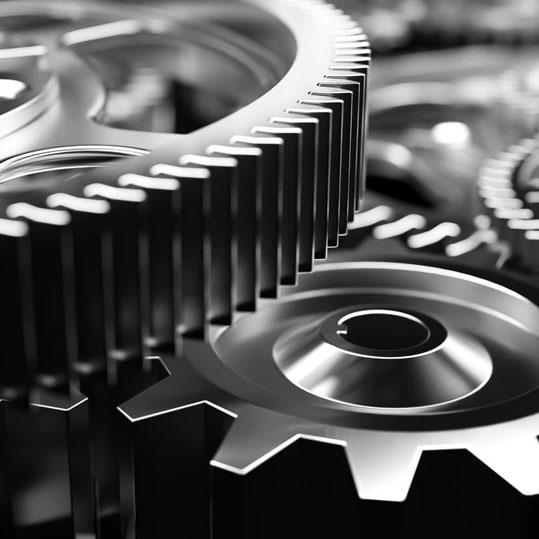
Metal treatments for precision engineering are essential for improving the performance, durability, and dimensional stability of high-precision components. Industries such as aerospace, medical manufacturing, automotive, defense, and industrial tooling rely on advanced surface treatments to increase hardness, corrosion resistance, wear protection, and friction control without compromising tight tolerances.
Processes including anodizing, PVD coating, electroplating, passivation, heat treatment, and phosphating are widely used to enhance the technical characteristics of metal parts. Modern finishing technologies, including precision polishing systems such as DLyte, also improve surface smoothness and functionality in demanding mechanical applications.
Choosing the correct metal finishing treatment is critical because even microscopic changes in thickness or surface stress can influence the performance of precision-engineered components.
What Are Metal Treatments in Precision Engineering?
Metal treatments are industrial processes applied to metallic components to improve their physical, chemical, and mechanical properties.
In precision engineering, these treatments are used to:
- Increase surface hardness
- Improve wear resistance
- Prevent corrosion
- Reduce friction
- Enhance fatigue resistance
- Improve dimensional stability
- Extend component lifespan
Unlike decorative finishing, precision engineering treatments are primarily functional and designed to support high-performance mechanical systems.
Why Surface Treatments Are Important in Precision Mechanics
Precision mechanical components operate under intense stress, temperature variations, friction, and corrosive environments.
Without proper finishing treatments, metal parts may experience:
- Premature wear
- Surface oxidation
- Reduced fatigue strength
- Dimensional deformation
- Friction-related failures
Protective treatments are therefore essential to ensure operational reliability in sectors requiring extreme precision.
Industries heavily dependent on precision metal finishing include:
| Industry | Typical Applications |
|---|---|
| Aerospace | Turbine components, landing gear |
| Medical | Surgical instruments, implants |
| Automotive | Transmission systems, gears |
| Tool Manufacturing | Cutting tools, molds |
| Electronics | Conductive precision parts |
| Defense | High-performance mechanical assemblies |
What Are the 5 Types of Metal Finishing?
Metal finishing includes several categories of treatments designed to improve surface properties and mechanical performance.
The five most common types of metal finishing are:
1. Electroplating
Electroplating deposits a thin metal layer onto another metal using an electric current.
Common plating materials include:
- Nickel
- Chrome
- Zinc
- Gold
- Silver
Main Benefits
- Improved corrosion resistance
- Increased hardness
- Better conductivity
- Enhanced wear protection
Electroplating is widely used for precision mechanical components because it creates durable protective coatings.
2. Anodizing
Anodizing is an electrochemical process mainly applied to aluminum and titanium.
The treatment creates a controlled oxide layer that improves:
- Corrosion resistance
- Surface hardness
- Aesthetic appearance
- Electrical insulation
Anodizing can add between 2 and 25 microns of thickness, making tolerance management essential in precision engineering.
Types of Anodizing
| Type | Main Characteristic |
|---|---|
| Type I | Chromic acid anodizing |
| Type II | Standard sulfuric anodizing |
| Type III | Hard coat anodizing |
Hard anodizing is especially useful for aerospace and industrial tooling applications.
3. PVD Coating (Physical Vapor Deposition)
PVD coating applies ultra-thin, hard coatings through vaporized metal deposition in a vacuum environment.
Popular PVD coatings include:
- Titanium Nitride (TiN)
- Titanium Carbonitride (TiCN)
- Chromium Nitride (CrN)
Advantages of PVD Coatings
- Extremely high hardness
- Low friction coefficient
- Excellent wear resistance
- Thin and uniform coating
PVD coatings are common on:
- Cutting tools
- Medical instruments
- Aerospace components
- Precision molds
4. Powder Coating
Powder coating uses electrostatically charged dry powder cured under heat.
It provides:
- Strong corrosion protection
- Uniform coverage
- Chemical resistance
- Attractive finish
Although widely used in industrial manufacturing, powder coating is less common in ultra-tight tolerance precision parts because of its relatively thicker layer.
5. Chemical Conversion Coatings
Chemical conversion coatings alter the metal surface chemically without significantly changing dimensions.
Examples include:
- Passivation
- Black oxide
- Phosphating
These treatments are ideal for precision components requiring dimensional accuracy.
What Are the Chemical Treatments for Metal?
Chemical metal treatments modify the surface chemistry of metals to improve protection and performance.
The most common chemical treatments include:
Passivation
Passivation is primarily used on stainless steel.
The process removes free iron contaminants using acid solutions, enhancing the natural chromium oxide protective layer.
Benefits of Passivation
- Improved corrosion resistance
- No dimensional change
- Enhanced cleanliness
- Better durability in medical and food environments
Passivation is extensively used in aerospace and medical manufacturing.
Phosphating
Phosphating creates a crystalline phosphate layer on ferrous materials.
This treatment improves:
- Corrosion protection
- Lubrication retention
- Paint adhesion
- Wear resistance
Two common phosphate coatings are:
- Zinc phosphate
- Manganese phosphate
Precision engineering companies frequently use phosphating to control friction coefficients in moving components.
Black Oxide Treatment
Black oxide is a chemical conversion coating that creates a dark protective surface without adding measurable thickness.
Main Advantages
- Rust prevention
- Dimensional stability
- Reduced light reflection
- Improved appearance
Because no additional thickness is added, black oxide is ideal for tight-tolerance mechanical parts.
Zinc Plating
Zinc plating is commonly applied to steel and ferrous materials.
The zinc layer provides sacrificial protection against corrosion by oxidizing before the underlying metal.
Why Zinc Plating Is Popular
- Cost-effective
- Strong corrosion protection
- Good industrial durability
- Suitable for large-scale production
What Are the Different Types of Metal Coatings?
Metal coatings can be classified based on their function and application method.
Metallic Coatings
These coatings use metal layers to improve protection and conductivity.
Examples include:
- Nickel plating
- Chrome plating
- Zinc coating
- Gold plating
Ceramic Coatings
Ceramic coatings provide:
- Heat resistance
- Chemical resistance
- Wear protection
They are common in aerospace and high-temperature tooling applications.
Organic Coatings
Organic coatings include:
- Paints
- Epoxy coatings
- Polymer films
These coatings primarily provide corrosion and environmental protection.
Conversion Coatings
Conversion coatings chemically alter the metal surface itself.
Examples include:
- Phosphating
- Passivation
- Black oxide
These are particularly useful for precision engineering because they minimally affect dimensions.
Thermal Spray Coatings
Thermal spraying projects molten material onto metal surfaces to create thick protective coatings.
Applications include:
- Turbine components
- Heavy industrial equipment
- Wear-resistant machinery
Functional Heat Treatments in Precision Engineering
Heat treatments are critical for improving the internal structure and surface properties of metals.
Nitriding
Nitriding diffuses nitrogen into the metal surface.
Main Benefits
- Increased hardness
- Better wear resistance
- Improved fatigue strength
- Minimal distortion
Nitriding is widely used for gears, shafts, and dies.
Carburizing
Carburizing introduces carbon into steel surfaces.
This creates:
- Hard outer layers
- Tough internal core
- Excellent impact resistance
Carburizing is common in automotive and heavy machinery manufacturing.
Shot Peening
Shot peening bombards surfaces with small particles to induce compressive stress.
Benefits
- Increased fatigue resistance
- Reduced crack propagation
- Improved durability
This treatment is especially important in aerospace engineering.
Key Precision Engineering Considerations
Precision engineering requires strict dimensional control.
Certain treatments add measurable thickness, including:
| Treatment | Typical Thickness Impact |
|---|---|
| Anodizing | 2–25 μm |
| Electroplating | Variable |
| Powder Coating | Thick |
| PVD Coating | Very thin |
Engineers must compensate for these dimensional changes during part design.
Hydrogen Embrittlement and Stress Management
Some treatments, especially electroplating, may introduce hydrogen into steel components.
This can lead to:
- Cracking
- Reduced fatigue life
- Structural failure
To prevent hydrogen embrittlement, post-treatment baking is often required for high-strength steel parts.
The Role of Precision Surface Finishing
Advanced finishing technologies such as DLyte precision polishing systems improve:
- Surface smoothness
- Friction reduction
- Fatigue resistance
- Cleaning performance
These technologies are increasingly important in medical, aerospace, and high-performance manufacturing.
How to Choose the Right Metal Treatment
Selecting the best treatment depends on several factors:
Consider:
- Base material
- Operating environment
- Corrosion exposure
- Friction levels
- Temperature conditions
- Dimensional tolerances
- Industry regulations
For example:
- Aerospace often favors PVD and nitriding
- Medical industries prioritize passivation
- Automotive applications frequently use zinc plating and carburizing
FAQ About Precision Engineering Metal Treatments
What are the 5 types of metal finishing?
The five major types are electroplating, anodizing, PVD coating, powder coating, and chemical conversion coatings.
What are the chemical treatments for metal?
Common chemical treatments include passivation, phosphating, black oxide, and zinc plating.
What are the different types of metal coatings?
Metal coatings include metallic coatings, ceramic coatings, organic coatings, conversion coatings, and thermal spray coatings.
What is the purpose of anodizing?
Anodizing improves corrosion resistance, surface hardness, and durability, especially for aluminum parts.
Why is PVD coating used in precision engineering?
PVD coatings provide high hardness, low friction, and excellent wear resistance while maintaining tight tolerances.
Does electroplating affect dimensions?
Yes. Electroplating adds thickness to the surface, which must be considered in precision part design.
What treatment is best for corrosion resistance?
Passivation, zinc plating, nickel plating, and anodizing are among the most effective corrosion-resistant treatments.
Metal treatments for precision engineering are fundamental for improving the reliability, performance, and lifespan of high-precision mechanical components. Processes such as anodizing, electroplating, phosphating, passivation, PVD coating, and heat treatment allow manufacturers to optimize hardness, wear resistance, corrosion protection, and dimensional stability across industries including aerospace, automotive, medical, and industrial tooling. As engineering standards continue to evolve, advanced surface finishing technologies will remain essential for achieving superior precision and operational efficiency.

